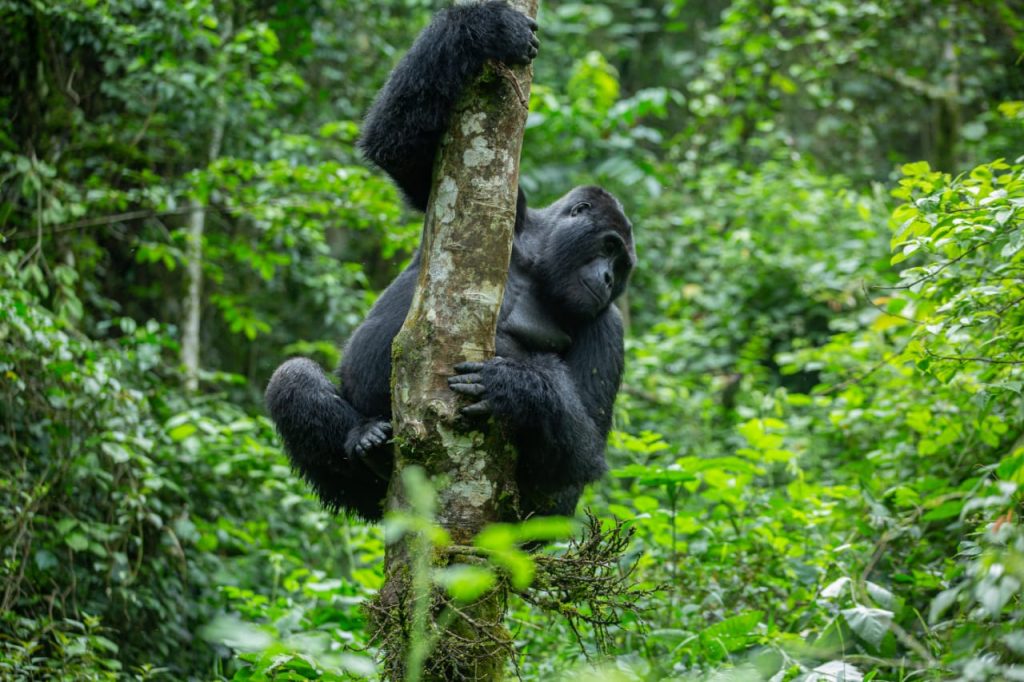
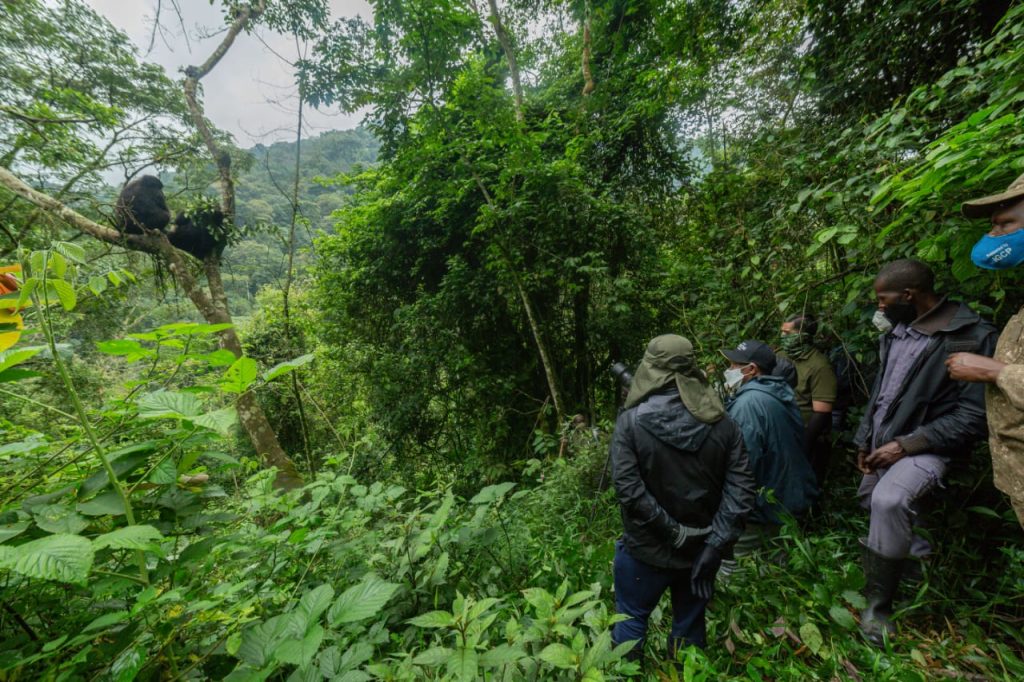
Bwindi Impenetrable National Park, a UNESCO World Heritage site since 1994, is located in southwestern Uganda. Known for its biodiversity and the critically endangered mountain gorillas, this park is a critical area for conservation and eco-tourism. The park was gazetted in 1991, amalgamating two forest reserves, and spans a rich history of flora and fauna conservation.

Bwindi Impenetrable National Park is situated on the edge of the Albertine Rift Valley. This is near the borders of Uganda, Rwanda, and the Democratic Republic of Congo. It’s covering approximately 331 square kilometers (128 square miles), it is characterized by steep, mountainous terrain and dense, mist-covered forest. The park’s name, “Bwindi,” means “impenetrable” in the local language, reflecting its thick, almost impenetrable forest canopy.
The park is approximately 460 kilometers (285 miles) from Kampala, Uganda’s capital, and about 465 kilometers (289 miles) from Entebbe, where Uganda’s main international airport is located. The journey by road can take around 8-10 hours, depending on traffic and road conditions. For a quicker option, visitors can opt for domestic flights from Entebbe International Airport to Kihihi or Kisoro airstrips, followed by a short drive to the park.

Bwindi Impenetrable National Park offers a range of accommodation options to suit various budgets:

Bwindi Impenetrable National Park is at the forefront of conservation efforts. It’s focusing on protecting its rich biodiversity and critically endangered species. Conservation strategies include:
Bwindi Impenetrable National Park is globally ranked among the top destinations for wildlife enthusiasts and eco-tourists. Its unique blend of wildlife, cultural experiences, and conservation success stories makes it a must-visit destination. The park’s effective management and sustainable tourism practices have earned it accolades and a stellar reputation in the global tourism and conservation communities.
Bwindi Impenetrable National Park stands as a testament to Uganda’s commitment to conservation and eco-tourism. Its rich biodiversity, captivating landscapes, and unique cultural experiences offer visitors an unforgettable adventure. Whether trekking to see the majestic mountain gorillas, exploring its diverse ecosystems, or engaging with local communities, Bwindi provides a remarkable and transformative travel experience.